Welcome! Your new Bosch oven offers exceptional performance and versatility.
This guide, alongside the detailed instruction manual, unlocks its full potential for confident cooking.
Refer to the product manual for comprehensive details on features, specifications, and safe operation of your appliance.
Understanding the Manual’s Importance
Your Bosch oven’s manual is a crucial resource. It contains vital safety information, preventing potential hazards and ensuring correct appliance usage.
Carefully reading the manual before initial operation is paramount for understanding all functions and features.
The manual details installation guidelines, preventing damage during setup. It also provides comprehensive instructions for operating modes, cleaning procedures, and troubleshooting common issues.
Keeping the manual accessible for future reference – or for subsequent owners – is highly recommended.
Accessing appliance data and service information is simplified through the manual, alongside warranty details and contact information for Bosch customer support.
Safety Precautions
Prioritize safety when using your Bosch oven. The instruction manual outlines essential precautions to prevent fire, electric shock, and personal injury.
Never operate a damaged appliance; inspect for transit damage before installation.
Ensure proper electrical connection requirements are met, avoiding overloaded circuits. Supervise children around the oven, as surfaces become hot during and after use.
Avoid using harsh abrasives during cleaning, which could damage the oven’s interior or exterior.
Always allow the oven to cool completely before performing maintenance or cleaning. Disconnect the power supply before any repairs or servicing are undertaken.

Oven Components and Features
Explore your Bosch oven’s design! The manual details the control panel, oven cavity, accessories, and heating elements, ensuring optimal performance and understanding.
Control Panel Overview
Navigating the control panel is key to utilizing your Bosch oven effectively. The instruction manual provides a detailed diagram and explanation of each button, dial, and display indicator.
Familiarize yourself with the function selector switch, temperature settings, timer controls, and any specialized mode buttons (like convection or grilling). Understanding these elements allows for precise control over your cooking process.
The manual will also explain any touchscreen functionalities or digital displays, including how to adjust settings and interpret error messages. Proper understanding ensures seamless operation and maximizes the oven’s capabilities.
Oven Cavity and Accessories
The Bosch oven cavity is designed for optimal cooking performance. Your instruction manual details the interior features, including rack positions, lighting, and any catalytic liners for easy cleaning.
Explore the included accessories – baking sheets, roasting racks, and potentially a pizza stone – and learn their proper usage as outlined in the manual. Understanding accessory placement and function is crucial for achieving desired results.
The manual will also explain any specific recommendations for cookware materials and sizes suitable for your oven, ensuring even heat distribution and preventing damage.
Heating Elements Explained
Your Bosch oven utilizes various heating elements for diverse cooking needs. The instruction manual provides a detailed explanation of the upper and lower heating elements, responsible for conventional baking and roasting.
It will also describe the function of any additional elements, such as a rear heating element for convection cooking, ensuring even heat circulation. Understanding element locations is vital for optimal results.
The manual clarifies how these elements interact during different operating modes, impacting cooking times and temperatures. Proper element function is key to achieving perfectly cooked dishes.
Initial Setup and Installation
Carefully unpack your Bosch oven and inspect for any damage. The manual guides you through electrical connection requirements and ensuring proper leveling for optimal performance.
Unpacking and Inspection
Upon delivery, thoroughly inspect the packaging for any visible signs of damage. If damage is apparent, document it immediately with photographs and contact your retailer. Carefully remove all packing materials, including protective films and cardboard inserts, from both the exterior and interior of the oven.
Verify that all included accessories, as listed in the instruction manual, are present. This typically includes oven racks, baking trays, and potentially a roasting pan. Do not connect the appliance if it appears damaged in any way. Retain the original packaging for potential future transport or warranty claims, as advised in the documentation.
Electrical Connection Requirements
Ensure your electrical system meets the oven’s specified voltage and frequency requirements, detailed in the instruction manual and on the appliance’s rating plate. A dedicated, properly grounded electrical circuit is crucial for safe and reliable operation. Do not use extension cords or adapters, as they can pose a fire hazard.
Installation should be performed by a qualified electrician, adhering to all local and national electrical codes. Verify the circuit breaker amperage is appropriate for the oven’s power consumption. Improper electrical connection can void the warranty and create a dangerous situation.
Leveling the Oven
Proper leveling is essential for optimal oven performance and door closure. Use a spirit level to check the oven’s stability, both side-to-side and front-to-back. Adjustable feet, typically located at the bottom corners, allow for precise height adjustments. Rotate these feet to raise or lower each corner until the oven is perfectly level.
An unleveled oven can cause uneven cooking results and potential door sealing issues. Refer to the instruction manual for specific leveling instructions related to your model. Ensure the oven is stable and doesn’t wobble before use.

Operating Modes and Functions
Explore diverse cooking options! Your Bosch oven features conventional, fan convection, grilling, and specialized modes like pizza and defrost, enhancing your culinary experience.
Conventional Heating
Traditional Cooking Method: Conventional heating utilizes heat from the top and bottom elements, creating a classic oven environment ideal for many recipes. This mode is perfect for baking, roasting, and general-purpose cooking where even heat distribution is desired, but faster cooking isn’t essential.
It mimics traditional oven functionality, making it familiar and reliable for everyday use; For optimal results, position your dishes centrally within the oven cavity. Remember to preheat the oven before placing food inside, ensuring consistent temperatures throughout the cooking process. This method is excellent for delicate pastries and cakes.
Fan Convection
Enhanced Cooking Performance: Fan convection employs a heating element combined with a fan to circulate hot air evenly throughout the oven cavity. This results in faster cooking times and more uniform browning, making it ideal for roasting meats, baking multiple trays of cookies, or achieving crispy results.
The circulating air eliminates hot spots, ensuring consistent temperatures on all levels. Reduce cooking temperatures slightly (around 25°F/15°C) compared to conventional heating. Utilize all oven rack positions for maximum efficiency when cooking large quantities. This mode is particularly effective for achieving golden-brown finishes.
Grilling Functions
Intense Top-Down Heat: Bosch ovens offer versatile grilling functions, utilizing a top heating element to deliver intense, direct heat. This is perfect for browning, searing, and quickly cooking foods like steaks, fish, or vegetables. Different grilling settings may include full-grid grilling or focused grilling for smaller portions.
Always use oven-safe cookware suitable for high temperatures. Position the food relatively close to the grill element for optimal results, monitoring closely to prevent burning. Utilize the grill pan accessory for easier cleanup and to prevent drippings from smoking.
Special Modes (e.g., Pizza Setting, Defrost)
Enhanced Cooking Options: Bosch ovens feature specialized modes beyond standard baking and roasting. The Pizza Setting optimizes temperature and heating elements for a crispy crust and perfectly melted toppings, often utilizing bottom heat. The Defrost function gently thaws frozen foods, preventing cooking during the process – select based on food type for best results.
Other modes may include a Bread Proofing setting for ideal dough rising, or a Keep Warm function. Consult your manual for specific instructions and recommended settings for each specialized mode to achieve optimal cooking outcomes.
Using the Timer and Clock
Precise Control: Easily set the time and utilize the timer function for accurate cooking. The delayed start feature allows convenient, pre-programmed operation.
Refer to your Bosch oven’s manual for detailed instructions on clock and timer settings.
Setting the Time
Initial Time Setup: Upon initial operation, or after a power interruption, your Bosch oven requires the current time to be set. Consult your oven’s specific instruction manual for the precise steps, as procedures can vary slightly between models.
Generally, this involves accessing the clock settings through the control panel. Use the arrow buttons or touch controls to adjust the hour and minute displays; Confirm your selection by pressing a designated ‘Set’ or ‘Confirm’ button.
Ensure accuracy, as the time is crucial for utilizing the timer and delayed start functions effectively. Some models may offer a 24-hour or 12-hour time format option, selectable within the settings menu.
Using the Timer
Timer Functionality: Your Bosch oven’s timer is a versatile tool for managing cooking times. The instruction manual details how to activate it – typically via a dedicated ‘Timer’ button on the control panel. Input the desired cooking duration using the arrow or numeric keys.
Once set, the timer will count down, and an audible alarm will sound when the time elapses. This is useful for reminding you to check or remove food.
Some models allow multiple timers to run concurrently. Refer to your manual for specific timer settings, including options for adjusting volume or disabling the alarm.
Delayed Start Function
Convenient Scheduling: The Delayed Start function, explained in your Bosch oven’s manual, allows you to pre-program the oven to begin cooking at a later time. First, set the desired start time using the clock function. Then, select the cooking mode and temperature, and activate the Delayed Start.
The oven will remain in standby until the programmed time is reached, then automatically begin cooking. This feature is ideal for preparing meals in advance, ensuring they’re ready when you are.
Always ensure food safety guidelines are followed when using this function.

Cleaning and Maintenance
Keep it Pristine! Your Bosch oven manual details self-cleaning programs and manual procedures for optimal performance and longevity. Regular upkeep is key!
Self-Cleaning Programs (Pyrolytic Cleaning)
Effortless Cleaning: Your Bosch oven features pyrolytic self-cleaning, a high-temperature process reducing residue to ash. The instruction manual provides detailed steps for initiating this cycle, including removing accessories and locking the door.
Important Considerations: Ensure proper ventilation during operation, as the process generates odors. The manual outlines safety precautions, such as keeping pets away and avoiding touching the oven during cleaning. After the cycle completes and the oven cools, simply wipe away the remaining ash with a damp cloth.
Cycle Duration: Cleaning time varies based on soil level, as detailed in your oven’s manual. Always consult the manual before using this feature.
Manual Cleaning Procedures
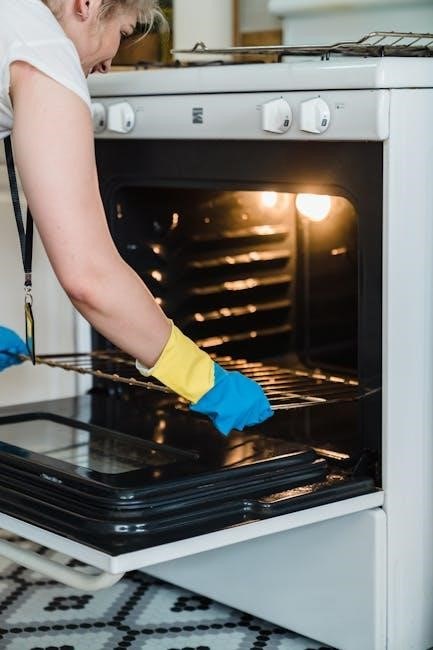
Regular Maintenance: For lighter cleaning or between pyrolytic cycles, manual cleaning is recommended. The Bosch oven instruction manual details a safe and effective approach using mild detergent and warm water. Avoid abrasive cleaners, which can damage the oven’s surfaces.
Step-by-Step Guide: Begin by removing racks and accessories. Apply the cleaning solution, allow it to dwell, then wipe clean with a soft cloth or sponge. Pay attention to stubborn stains, requiring gentle scrubbing.
Door and Seal: The manual also provides specific instructions for cleaning the oven door and its seal, ensuring optimal performance.
Cleaning the Oven Door
Maintaining Clarity: A clean oven door is crucial for visibility during cooking. The Bosch oven instruction manual emphasizes gentle cleaning methods to avoid scratches. Use a non-abrasive cleaner specifically designed for glass surfaces.
Glass Panel Care: For light soiling, warm water and a soft cloth suffice. Stubborn stains may require a specialized glass cleaner, applied carefully. Avoid harsh chemicals or scouring pads.
Seal Integrity: Regularly clean the door seal with a damp cloth to remove food residue, ensuring a tight seal for efficient cooking. Refer to the manual for detailed guidance.

Troubleshooting Common Issues
Facing problems? The Bosch oven manual provides solutions for issues like heating failures or error codes.
Consult it first for quick fixes and guidance!
Oven Not Heating
If your Bosch oven isn’t heating, first verify the power supply and ensure the oven is correctly connected. Check the control panel to confirm a cooking mode is selected and the temperature is set appropriately. The instruction manual details how to diagnose potential issues with the heating elements.
Consult the manual for error code interpretations, as these often pinpoint the problem. A tripped circuit breaker or blown fuse could also be the cause. Do not attempt repairs yourself; refer to the manual for contacting Bosch customer service or a qualified technician for assistance. Safety is paramount!
Error Codes and Their Meanings
Bosch ovens utilize error codes to signal malfunctions, simplifying troubleshooting. Your oven’s instruction manual contains a dedicated section listing these codes and their corresponding meanings; These codes can indicate issues ranging from temperature sensor failures to problems with the heating elements or control module.
Carefully consult the manual when an error code appears. It will guide you through potential solutions, and whether professional service is required. Do not ignore error codes; addressing them promptly prevents further damage. The manual provides vital information for safe and effective oven operation.
Door Issues
The Bosch oven door is engineered for safety and efficiency, but issues can arise. Your instruction manual details proper door operation and troubleshooting steps. Common problems include difficulty closing, uneven gaps, or glass panel concerns. Never force the door; this can cause damage.
Refer to the manual for guidance on door hinge adjustments and cleaning procedures. It also outlines safety precautions regarding a damaged door seal, which impacts oven temperature. If issues persist, consult a qualified technician; attempting complex repairs yourself is not recommended.

Advanced Features and Settings
Explore innovative functions! Your Bosch oven manual details Moisture Plus, Sous Vide, and Home Connect capabilities. Unlock precision cooking and smart appliance control.
Moisture Plus Function
Enhance baking results! The Moisture Plus function introduces steam into the oven cavity during the initial phase of baking. This prevents bread and rolls from forming a hard crust too quickly,
promoting a softer, chewier interior and a beautifully glossy exterior.
Consult your Bosch oven’s instruction manual for specific settings and recommended usage. It’s ideal for pastries, sourdough breads, and dishes where maintaining moisture is crucial.
The manual will guide you on water reservoir filling and optimal program selection for various recipes. Experiment to achieve bakery-quality results at home!
Sous Vide Mode
Precision cooking redefined! Your Bosch oven’s Sous Vide mode allows for incredibly precise temperature control, mimicking the professional technique of water bath cooking. This ensures food is cooked evenly and retains maximum moisture and flavor.
Refer to your instruction manual for detailed guidance on utilizing this feature. It will explain optimal temperature settings for different proteins, vegetables, and even desserts. Proper vacuum sealing is essential for successful sous vide cooking; the manual provides helpful tips. Explore new culinary horizons with consistent, restaurant-quality results!
Connectivity and Home Connect (if applicable)
Unlock smart cooking! If your Bosch oven features Home Connect, you gain remote control and enhanced functionality via your smartphone or tablet. The instruction manual details the setup process, including Wi-Fi connection and account creation.
Explore features like remote preheating, monitoring cooking progress, and accessing a world of recipes directly through the app. Digital manual access and easy service access are also benefits. Ensure your appliance is connected to a stable network for optimal performance. Discover a new level of convenience and control!
Recipes and Cooking Tips
Elevate your cooking! The Bosch oven manual provides recommended temperatures for various foods and guidance on utilizing accessories for optimal, delicious results.
Recommended Temperatures for Different Foods
Achieving perfect results relies on precise temperature control; Your Bosch oven manual details suggested temperatures for a wide array of dishes, ensuring consistently delicious outcomes.
For poultry, a temperature of 165°F (74°C) is recommended for safety and tenderness. Beef roasts benefit from 135°F (57°C) for medium-rare, while fish typically requires 145°F (63°C).
Vegetables vary; root vegetables like potatoes roast beautifully at 400°F (200°C), while delicate vegetables need lower temperatures. Always consult the manual for specific food guidelines, as cooking times and temperatures can vary based on weight and desired doneness.
Using Oven Accessories for Optimal Results
Maximize your oven’s capabilities with Bosch’s range of accessories, detailed in your instruction manual. Baking trays ensure even heat distribution for cookies and cakes, while roasting racks elevate meats for crispy results.
The stone baking sheet is ideal for achieving pizzeria-quality crusts, and the universal pan catches drips for easy cleanup.
Proper accessory placement, as illustrated in the manual, is crucial for optimal airflow and consistent cooking. Explore the benefits of each accessory to unlock new culinary possibilities and enhance your cooking experience with your Bosch oven.

Warranty Information and Support
Protect your investment! Register your Bosch oven and review the warranty details in the manual.
Access customer service and spare parts information online for assistance.
Registering Your Appliance
Secure your benefits! Registering your new Bosch oven is crucial for warranty validation and accessing exclusive services. The instruction manual details the registration process, typically involving online submission of your appliance details and purchase information.
Registration allows easy access to Bosch Home Appliances Service, digital manuals, and appliance data. You’ll also receive updates on potential warranty extensions, discounts on accessories and spare parts, and helpful tips for optimal oven performance. Don’t delay – register today to maximize your ownership experience and ensure prompt support if needed!
Contacting Bosch Customer Service
Need assistance? Bosch provides comprehensive customer support for your oven. The instruction manual lists various contact methods, including a dedicated phone number and online support portal. Accessing their website allows you to submit inquiries, browse FAQs, and schedule service appointments.
For prompt resolution of issues, have your appliance’s model number and serial number readily available. Bosch’s skilled technicians can guide you through troubleshooting, answer questions about features, and coordinate repairs if necessary. Reliable support ensures a seamless cooking experience with your Bosch appliance.
Finding Spare Parts
Need a replacement part? Maintaining your Bosch oven’s performance is easy with access to genuine spare parts. The instruction manual often directs you to authorized Bosch service centers or online retailers specializing in appliance components.
When ordering, always have your oven’s model and serial number handy to ensure compatibility. Bosch prioritizes quality, so using authentic parts guarantees optimal functionality and safety. Online platforms frequently offer diagrams and part lists, simplifying the selection process. Don’t compromise on performance – choose official Bosch spares for lasting reliability.
